
DGL-Jahrestagung


Theoria cum praxi
–
zukunft
wasser
gestalten
41. DGL-Jahrestagung
2026
Wissenschafts- und Technologiepark Adlershof
14.–18. September 2026
Programm (vorläufig)| Program (preliminary)
Detailliertes Programm als PDF
Detailed Program as a PDF
Posterliste (PDF) | List of posters (PDF)
Plenarredner:innen | Speakers »
Information Vorträge/Poster | Information presentations/posters »
Programmübersicht | Program Overview


Plenarredner:innen | Speakers
Damien Bouffard (Eawag / Université de Lausanne)
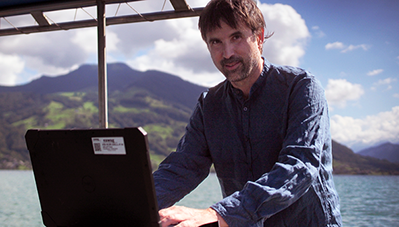
Foto: Oscar Sepúlveda Steiner, Eawag
Enhancing lake research and management with integrated In situ observations, remote sensing, and hydrodynamic modelsAbstractCombining remote sensing products, numerical models, and high-frequency in situ observations is a well-established approach for understanding lake systems, yet expertise across all three domains remains difficult to consolidate in practice. Open science offers a practical path forward. Alplakes is a freely accessible web application providing operational one and three-dimensional hydrodynamic simulations and remote sensing data for lakes in the European Alpine region. By integrating outputs from multiple research projects, the platform functions as a digital twin for each lake, making model outputs and Earth observation products accessible to researchers, water managers, and the broader public alike. The platform currently serves over 350,000 users per year. Here we present the architecture of Alplakes, the hydrodynamic modelling framework at its core, and recent scientific use cases that illustrate the value of combining these data streams in an open, transparent environment. We also discuss the potential for scaling this approach to a broader set of alpine water bodies. The platform is available at https://www.alplakes.eawag.ch.Zur Person | About the personDamien Bouffard schloss sein Ingenieursstudium mit Spezialisierung in Hydrodynamik an der Centrale Marseille ab und erwarb anschließend einen Master in Physikalischer Ozeanographie an der Université de la Méditerranée. 2008 promovierte er an der EPFL. Nach einem Postdoc in Environmental Fluid Dynamics an der Queen's University (Kanada) übernahm er 2012 eine Stelle als First Assistant im Aquatic Physics Laboratory der EPFL, bevor er 2017 zur Eawag wechselte, wo er seitdem die Aquatic Physics Group leitet und heute zudem stellvertretender Departementsleiter ist. Seit 2022 ist er außerdem ad personam Associate Professor an der Universität Lausanne. Damien Bouffards Forschung konzentriert sich auf die physikalischen Prozesse, die Transport- und Mischungsvorgänge in Seen steuern, und verbindet dazu In-situ-Beobachtungen, hydrodynamische Modellierung und Fernerkundung. Er ist Mitglied des Steering Committees der schwimmenden Forschungsplattform LéXPLORE auf dem Genfersee und hat zahlreiche Projekte zu diesem Themenfeld geleitet, darunter DataLakes und Alplakes. Er hat über 15 Doktorierende und Postdocs (mit-)betreut und unterrichtet an EPFL, ETH Zürich, UNIL und UNIGE. International ist er als Topical Editor für Hydrology and Earth System Sciences sowie Associate Editor für Aquatic Sciences und das Journal of Great Lakes Research tätig. Von 2021 bis 2024 war er Mitglied der ETH Open Research Data Expert Group, die Initiativen zur Förderung offener Forschungsdaten im ETH-Bereich vorbereitete und evaluierte. So war Damien Bouffard auch an der Entwicklung des Open-Source-Projektes Alplakes beteiligt, dessen Ziel es ist, operationelle Produkte bereitzustellen, die auf einer Kombination aus Fernerkundung und hydrodynamischen Modellen für eine Reihe europäischer Seen basieren. Damien Bouffard earned his engineering degree with a specialization in hydrodynamics from Centrale Marseille and subsequently obtained a master’s degree in physical oceanography from the Université de la Méditerranée. In 2008, he earned his Ph.D. from EPFL. After a postdoc in Environmental Fluid Dynamics at Queen’s University (Canada), he took a position as First Assistant at EPFL’s Aquatic Physics Laboratory in 2012, before moving to Eawag in 2017, where he has since led the Aquatic Physics Group and is now also Deputy Head of Department. Since 2022, he has also been an ad personam associate professor at the University of Lausanne. Damien Bouffard’s research focuses on the physical processes that govern transport and mixing in lakes, combining in-situ observations, hydrodynamic modeling, and remote sensing. He is a member of the Steering Committee for the LéXPLORE floating research platform on Lake Geneva and has led numerous projects in this field, including DataLakes and Alplakes. He has (co-)supervised over 15 doctoral students and postdocs and teaches at EPFL, ETH Zurich, UNIL, and UNIGE. Internationally, he serves as a topical editor for Hydrology and Earth System Sciences and as an associate editor for Aquatic Sciences and the Journal of Great Lakes Research. From 2021 to 2024, he was a member of the ETH Open Research Data Expert Group, which developed and evaluated initiatives to promote open research data within the ETH Domain. Damien Bouffard was also involved in the development of the open-source project Alplakes, which aims to provide operational products based on a combination of remote sensing and hydrodynamic models for a number of European lakes.
Ursula Gaedke (Universität Potsdam)
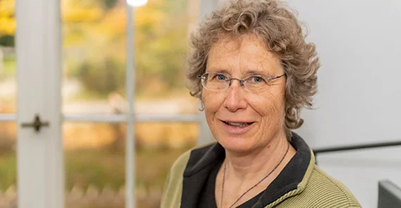
Foto: Tobias Hopfgarten, Uni Potsdam
Lessons from the past for the future: 40 years of compiling and analysing data from Lake Constance and other lakesAbstractMeanwhile we have a substantial treasure of long-term field observations for many water bodies obtained by e.g., public authorities and research institutions. These greatly contribute to understanding the functioning of these ecosystems and developing and implementing efficient management. I will present strategies and simple (graphical) tricks for selecting and analysing field observations and experimental data and how we can publish them to be available worldwide. Furthermore, I will exemplify the potential for true innovation from findings, which first appear odd and frustrating, e.g., because numbers seem not to add up or contradict our original expectations. Finally, I will pass on a mystery we could not solve during the past 30 years to the next generation.Zur Person | About the personUrsula Gaedke schloss 1983 ihr Biologiestudium an der Universität Oldenburg ab und erwarb 1984 als DAAD-Stipendiatin ein Diplom in Angewandter Statistik an der University of Oxford. 1988 promovierte sie an der Universität Oldenburg und habilitierte sich 1995 an der Universität Konstanz in Ökologie und Limnologie, wo sie zuvor von 1986 bis 1991 im Sonderforschungsbereich "Stoffkreisläufe im Bodensee" sowie anschließend bis 1999 als Wissenschaftliche Assistentin tätig war. Ab 1999 leitete sie die Abteilung Ökologie und Ökosystemmodellierung an der Universität Potsdam bis zu Ihrer Emeritierung Anfang 2026. Ursula Gaedkes Forschung befasst sich mit der quantitativen Dynamik von Planktongesellschaften und Nahrungsnetzen und deren Anpassungsfähigkeit an veränderte Umweltbedingungen. Im Wechselspiel zwischen mathematischer Modellierung, Zeitreihenanalyse von Langzeitstudien im Freiland und Laborexperimenten an Planktonsystemen trug sie maßgeblich zur ökologischen Theoriebildung und zur Lösung drängender ökologischer Probleme wie den Folgen des Biodiversitätsverlustes und des Klimawandels bei. Von 2014 bis 2024 leitete sie das DFG-Schwerpunktprogramm DynaTrait, das den Zusammenhang zwischen funktioneller Diversität und ökologischer Dynamik in aquatischen Lebensgemeinschaften untersuchte. Für ihre Forschung wurde sie 2016 mit der Naumann-Thienemann-Medaille der International Society of Limnology (SIL) ausgezeichnet. Sie war als Gutachterin für zahlreiche nationale und internationale Förderorganisationen tätig, darunter die DFG, die National Science Foundation (NSF), die European Science Foundation (ESF) und den Schweizerischen Nationalfonds, und ist seit 2022 Mitglied des Senats der Leibniz-Institute und der Senatskommission Wettbewerb. Über vier Jahrzehnte hat sie maßgeblich am Aufbau und der Auswertung eines der umfangreichsten limnologischen Langzeitdatensätze Europas am Bodensee mitgewirkt. Ursula Gaedke completed her degree in biology at the University of Oldenburg in 1983 and, as a DAAD fellow, earned a diploma in applied statistics at the University of Oxford in 1984. In 1988, she earned her Ph.D. from the University of Oldenburg and completed her habilitation in Ecology and Limnology at the University of Konstanz in 1995, where she had previously worked as a research assistant from 1986 to 1991 in the Collaborative Research Programme „Cycling of Matter in Lake Constance” and subsequently until 1999. From 1999, she headed the Department of Ecology and Ecosystem Modeling at the University of Potsdam until her retirement in early 2026. Ursula Gaedke’s research focuses on the quantitative dynamics of plankton communities and food webs and their adaptability to changing environmental conditions. Through the interplay of mathematical modeling, time-series analysis of long-term field studies, and laboratory experiments on plankton systems, she made significant contributions to the development of ecological theory and to solving pressing ecological problems such as the consequences of biodiversity loss and climate change. From 2014 to 2024, she led the DFG Priority Programme DynaTrait, which investigated the relationship between functional diversity and ecological dynamics in aquatic communities. In 2016, she was awarded the Naumann-Thienemann Medal by the International Society of Limnology (SIL) for her research. She has served as a reviewer for numerous national and international funding organizations, including the DFG, the National Science Foundation (NSF), the European Science Foundation (ESF), and the Swiss National Science Foundation, and has been a member of the Senate of the Leibniz Institutes and the Senate Commission on Competition since 2022. For over four decades, she has played a key role in establishing and analyzing one of Europe’s most comprehensive long-term limnological datasets at Lake Constance.
Gabriel Singer
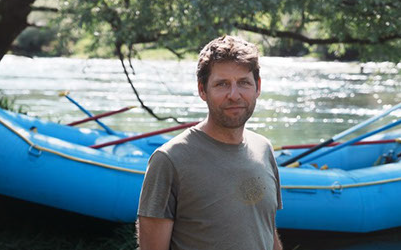
Foto: Josh Lim, Riverwatch
Catalyzing engaged river science at large scalesAbstractEmpirical research at river network scale provides novel insights into controls on, and interactions between, riverine biodiversity and ecosystem functioning. In six European river networks spanning a latitudinal gradient, we show how local drying and fragmentation affect leaf litter decomposition through changes in diversity and composition of detritivorous macroinvertebrates, bacteria and fungi. In the undammed Greek/Albanian Vjosa, we demonstrate how geological diversity and dispersal processes promote high periphyton beta-biodiversity, but only community turnover driven by species sorting is relevant for primary production rates. The necessary field work implies travelling across long ecological gradients, providing unrivalled personal landscape experiences. It is the combination of intellectual understanding and emotional connection that turns ecologists into strong stewards for ecosystems. Feeling strong and thinking big is what is needed if we want to bring life back to degraded rivers, and protect life in the last refuges. Both restoration and conservation need a committed pursuit of river network scale visions.Zur Person | About the personGabriel Singer, geboren 1976 in Niederösterreich, studierte Biologie an der Universität Wien, wo er 2009 mit einem Doktorat in Ökologie abschloss. Nach einer Zeit als PostDoc an der Universität Wien und am WasserCluster Lunz wechselte er 2013 als Arbeitsgruppenleiter an das Leibniz-Institut für Gewässerökologie und Binnenfischerei (IGB) in Berlin, wo er die Arbeitsgruppe "Ökosystemökologie von Bächen" leitete. Seit dem 1. Dezember 2019 ist er Universitätsprofessor für Aquatische Biogeochemie am Institut für Ökologie der Universität Innsbruck. Seine Arbeit wurde mehrfach ausgezeichnet: unter anderem mit dem Umweltpreis der Stadt Wien (2009), einem Junior-Fellowship des Hanse-Wissenschaftskollegs und dem ERC-Starting Grant (2016). Singers Forschung verbindet großräumige, vergleichende Feldstudien an Flussnetzwerken mit der Frage, wie Biodiversität und Ökosystemfunktionen wie Laubabbau und Primärproduktion zusammenhängen. Dabei ist ihm wichtig, dass seine Studierenden das Ökosystem Fluss nicht nur intellektuell, sondern auch emotional erfassen: Wer Flüsse aus eigener Erfahrung kennt und sich emotional mit ihnen verbunden fühlt, wird sich glaubwürdig und motiviert für ihren Schutz und ihre Renaturierung einsetzen. Gabriel Singer, born in 1976 in Lower Austria, studied biology at the University of Vienna, where he earned a Ph.D. in ecology in 2009. After a period as a postdoc at the University of Vienna and at the WasserCluster Lunz, he moved to the Leibniz Institute of Freshwater Ecology and Inland Fisheries (IGB) in Berlin in 2013, where he headed the “Ecosystem Ecology of Streams” research group. Since December 1, 2019, he has been a university professor of Aquatic Biogeochemistry at the Institute of Ecology at the University of Innsbruck. His work has received numerous awards, including the City of Vienna Environmental Prize (2009), a Junior Fellowship from the Hanse-Wissenschaftskolleg, and the ERC Starting Grant (2016). Singer’s research combines large-scale, comparative field studies of river networks with the question of how biodiversity and ecosystem functions—such as leaf litter decomposition and primary production—are interconnected. It is important to him that his students understand the river ecosystem not only intellectually but also emotionally: Those who know rivers from personal experience and feel an emotional connection will credibly and enthusiastically advocate for their protection and restoration.
Information Vorträge/Poster | Information presentations/posters
Information Vorträge | Information presentationsFür die Vorträge stehen 12 Minuten zur Verfügung, anschließend bis zu drei Minuten für Fragen. Alle Vortragsräume sind mit einem Laptop ausgestattet. Standard-Präsentationsformat ist .pptx. Auch .pdf-Formate sind möglich. Eigene Rechner können leider nicht angeschlossen werden.Um einen reibungslosen Ablauf der Vortragssessions zu garantieren, möchten wir Sie bitten, Ihre Tagungsbeiträge möglichst frühzeitig, mindestens jedoch zwei Stunden vor dem Beginn der Session, hochzuladen.Informationen zum Hochladen erfolgen in Kürze.Wenn ein Hochladen nicht möglich ist, können Sie Ihren Vortrag auf einem USB-Speicherstick mitbringen und im Tagungsbüro hochladen. Presentations are allocated 12 minutes, followed by up to three minutes for questions. All presentation rooms are equipped with a laptop. The standard presentation format is .pptx. .pdf formats are also accepted. Unfortunately, you will not be able to connect your own computers.To ensure that the presentation sessions run smoothly, we would ask you to upload your conference papers as early as possible, and at least two hours before the start of the session.Information on how to upload your papers will be provided shortly.If uploading is not possible, you may bring your presentation on a USB stick and upload it at the conference office.Information Poster | Information postersAlle Poster-Präsentierende haben die Gelegenheit, ihr Projekt in einem kurzen Poster-Teaser von maximal 55 Sekunden zu präsentieren und dabei die Kernbotschaft ihres Posters pointiert auf den Punkt zu bringen. Die Speed Talks finden am Dienstag von 13:00 bis 14:00 Uhr parallel in zwei Räumen statt – eine großartige Gelegenheit, Neugier zu wecken, ins Gespräch zu kommen und die Vielfalt der Themen kennenzulernen.  Wenn Sie an den Speed-Talks teilnehmen möchten, laden Sie bitte eine Powerpoint-Folie bis spätestens Freitag, den 11. September 2026 auf einem Link hoch, der in Kürze zur Verfügung steht. Nur so können wir sicherstellen, dass die Präsentationen im Hörsaal für Sie verfügbar sind. Bitte verwenden Sie ausschließlich das .pptx-Format und die Foliengröße 16:9, weil alle Posterpräsentationen zu einer Powerpoint-Datei zusammengefasst werden. Direkt auf die Speed Talks folgt am Dienstag die Postersession 1 auf beiden Etagen des Erwin Schrödinger Zentrums bis 15:00 Uhr. Postersession 2 findet am Mittwoch auf beiden Etagen von 16:30 bis 17:30 Uhr statt. Die Poster werden darüber hinaus während der gesamten Tagung zugänglich sein, so dass Sie genügend Gelegenheit haben werden, die Poster in Ruhe zu lesen. Zur besseren Orientierung sind die Poster thematisch nach Session sortiert. Die Posterwände haben eine Größe von 115 x 145 cm, so dass DIN A0 Poster im Portraitformat (hochkant) problemlos darauf passen. PosterpreisMit dem DGL-Posterpreis werden herausragende Poster prämiert. Jeder Posterbeitrag kann zur Teilnahme angemeldet werden. Falls dies im Rahmen der Beitragsanmeldung nicht erfolgt ist, besteht direkt zu Beginn der Tagung die Option der nachträglichen Anmeldung zum Posterpreis beim Tagungsbüro. Stimmberechtigt sind alle Teilnehmenden der Tagung. Stimmzettel zur Posterprämierung liegen im Tagungsbüro aus. Darauf ist auch die Prozedur zur Abstimmung beschrieben. Die Preisverleihung erfolgt am Donnerstagmittag während des Abschlussplenums (Hörsaal 0/115). Der verantwortliche Organisator des Posterpreises ist: Prof. Dr. René SahmFG "Gewässerökologie in der Landschaftsplanung"Universität Kassel All poster presenters will have the opportunity to present their project in a short poster teaser lasting no more than 55 seconds, concisely highlighting the key message of their poster. The Speed Talks will take place on Tuesday from 1.00 pm to 2.00 pm in two rooms running in parallel – a great opportunity to spark curiosity, strike up conversations and discover the diversity of topics on offer.
  If you would like to take part in the Speed Talks, please upload a PowerPoint slide by Friday 11 September 2026 at the latest via a link that will be available shortly. This is the only way we can ensure that the presentations are available to you in the lecture theatre. Please use the .pptx format and a 16:9 slide aspect ratio only, as all poster presentations will be compiled into a single PowerPoint file. Poster Session 1 will follow directly after the Speed Talks on Tuesday, taking place on both floors of the Erwin Schrödinger Centre until 15:00. Poster Session 2 will take place on Wednesday on both floors from 16:30 to 17:30. The posters will also be on display throughout the conference, so you will have plenty of opportunity to read them at your leisure. To help you find your way around, the posters are organised by session and topic. The poster boards measure 115 x 145 cm, so DIN A0 posters in portrait format (vertical) will fit on them easily. Poster AwardThe DGL Poster Prize is awarded to outstanding posters. Any poster presentation may be entered for the prize. If this has not been done as part of the registration process, participants may register for the Poster Prize retrospectively at the conference office at the very start of the conference. All conference participants are eligible to vote. Ballot papers for the Poster Prize are available at the conference office. These also describe the voting procedure. The award ceremony will take place on Thursday at midday during the closing plenary session (Lecture Theatre 0/115). The organiser responsible for the Poster Prize is:Prof. Dr. René SahmFG "Gewässerökologie in der Landschaftsplanung"Universität Kassel
NEWS

komplettes Programm mit Abstracts + praktische Hinweise + persönlicher Tagungsplan + Präsentationsupload ...
Weitere Informationen Der digitale Tagungsführer ist erreichbar über https://dgl2026.igb-berlin.de. Er kann vom Desktop sowie auch mobil über das Smartphone genutzt werden. Hier finden Sie alle relevanten Infos, die Sie für Ihren Besuch der Tagung benötigen: • Das gesamte Programm inklusive Abstracts• Praktische Hinweise: Gebäude- und Posterstellplan, Infos zu Exkursionen und Mittagessen• Gezielte Suche nach Sessions, Vorträgen, Autor:innen und Stichworten• Persönlicher Tagungsplan generieren und exportieren als Kalender-Eintrag oder PDF; geräteübergreifende Nutzung durch Link oder QR-Code möglich• Komplett bilingual, Sprache wechseln ist flexibel möglich• individuelle Anpassung der Schriftgröße• nach erstmaligem Aufruf funktioniert die Seite auch komplett offline• bei Updates im Programm werden Sie auf eine neue Version der App hingewiesen und gebeten, die Seite zu aktualisieren (hierfür bedarf es natürlich Internetzugang) Beim ersten Aufrufen der Webseite gelangen Sie zudem automatisch zu einem Tutorial, das Sie auch überspringen oder später nochmal aufrufen können. Wichtig:Der persönliche Tagungsplan wird nur im aktuellen Browser auf Ihrem Gerät gespeichert. Ein Schließen des Browserfensters oder Wechseln zwischen anderen Apps ist kein Problem, hier bleibt Ihr Tagungsplan erhalten. Wenn Sie jedoch das Gerät oder den Browser wechseln, nutzen Sie die Option „Teilen“, um den Plan zu übertragen bzw. zu sichern. Upload Ihrer Präsentation:Falls Sie einen Vortrag angemeldet haben, erfolgt der Upload Ihrer Präsentation ebenfalls über den digitalen Tagungsführer. Im Reiter „Info“ scrollen Sie bis „Upload deiner Präsentation“, wo alles weitere erklärt ist.
Bei unseren Veranstaltungen bitten wir Sie, ein Namensschild zu tragen. Darüber hinaus ist es möglich, dass die von uns organisierten Veranstaltungen fotografiert oder gefilmt werden, dass die Presse anwesend ist, dass Vorträge über Zoom oder andere Software übertragen werden, dass Videokonferenzen oder Live-Streaming mit oder ohne Aufzeichnung stattfinden. Nähere Informationen erhalten Sie auf Anfrage und vor Ort bei der Veranstaltung.